A delivery menu in Kuwait should help a customer choose accurately and help the kitchen fulfil the same promise. That means a short item name, a useful description, a current price, clear choices, an honest image, and operational rules that still work during the busiest hour.
The goal is not to upload the dine-in menu and hope the app does the rest. Build a smaller delivery assortment around dishes that travel well, can be prepared consistently, and remain easy to understand on a phone.
Why Kuwait restaurants should review delivery menus now
Kuwait’s Ministry of Commerce and Industry published Ministerial Decision No. 109 of 2026 for intermediary electronic platforms and applications used to display, order and deliver products to consumers. The Ministry’s Consumer Protection Department also says it monitors social-media advertising, verifies licences for offers, issues discount licences and checks prices attached to transactions.
For restaurant marketers, the practical implication is simple: menu copy, offer wording, price operations and fulfilment cannot be managed as separate tasks. A campaign may create attention, but the menu and kitchen decide whether the same promise reaches the customer.
Build a delivery assortment, not a digital copy
Start with the food after twenty or thirty minutes, not with the popularity of the dine-in dish. Some items photograph well but lose texture, separate, leak or arrive at the wrong temperature. Others require so many modifiers that mistakes become likely.
Score each candidate item on five questions:
- Does it travel without losing its essential quality?
- Can the kitchen prepare it consistently during peak demand?
- Can a customer understand the portion and included components?
- Can it be packed without avoidable leakage or damage?
- Does its price still make operational sense after packaging and platform costs?
Remove items that fail the promise. A shorter reliable menu is often more useful than a large catalogue that creates cancellations, substitutions and disappointed expectations.
Write each menu item as a complete promise
| Element | What the customer needs | Operational check |
|---|---|---|
| Name | A recognisable dish, not an internal kitchen nickname | Matches the order ticket |
| Description | Main ingredients, cooking style and included sides | Uses the current recipe |
| Portion | A practical indication such as pieces, serves one, or weight where appropriate | Kitchen portions it consistently |
| Choices | Only decisions that meaningfully change the item | Each modifier is available and routed correctly |
| Price | The current payable item price and clearly explained extras | Matches the approved channel setup |
| Image | The food and included components as delivered | Packaging and garnish do not create a false expectation |
Describe what is included
“Chicken meal” forces the customer to guess. “Grilled chicken pieces with spiced rice, garlic sauce and pickles” is more useful, provided those components are actually included. Do not use decorative language to hide an unclear portion.
Keep modifiers controlled
Every option creates a branch for the customer, app and kitchen. Group only necessary choices: protein, size, heat level, one side or an add-on. If a choice cannot be fulfilled reliably, remove it until the operation can support it.
Design photographs for accuracy and appetite
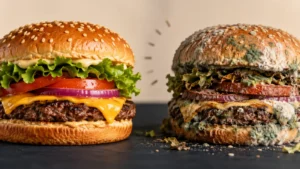
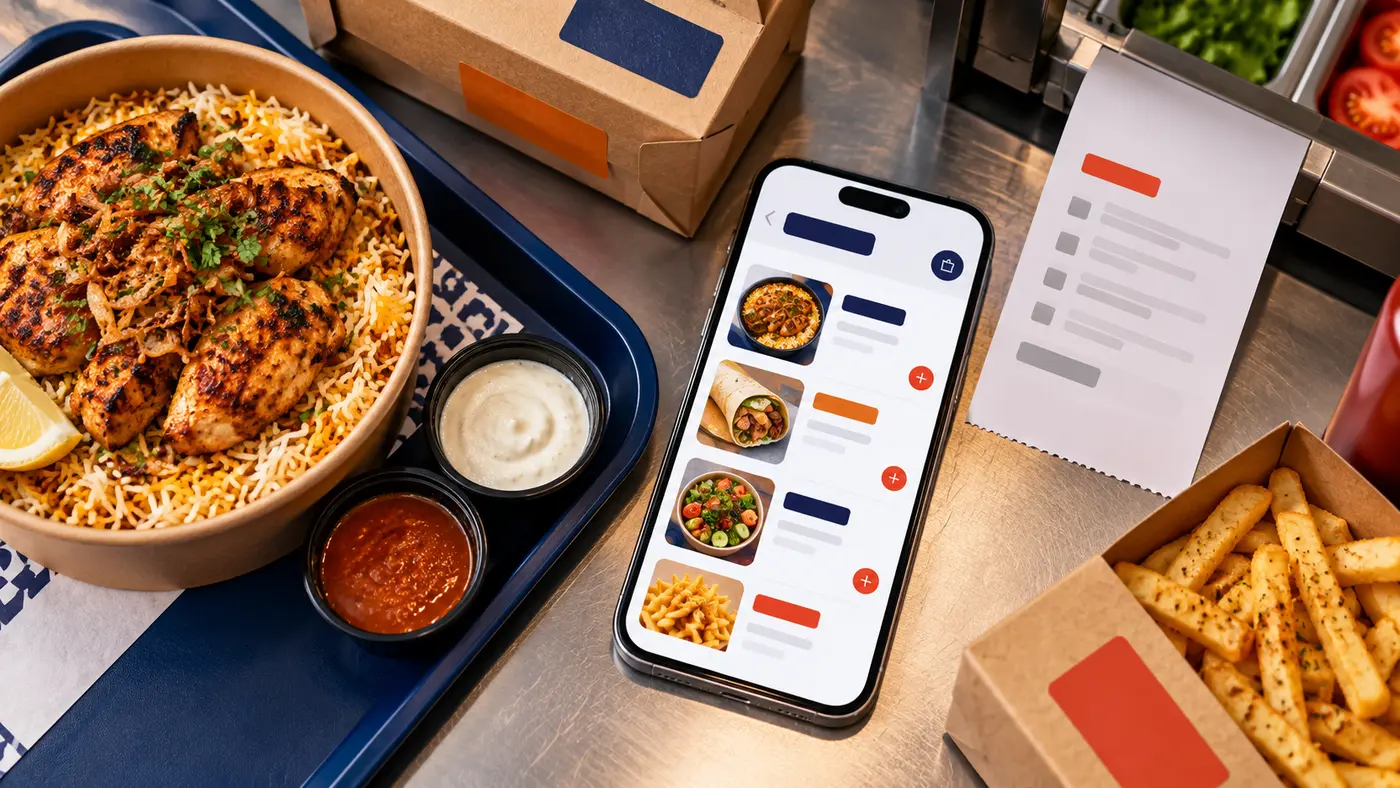
A delivery image should show the item a customer will receive, from an angle that makes portion and components understandable. Avoid using a family table if the listing sells one serving. Do not show sauces, drinks or sides that are not included unless the distinction is unmistakable.
Use one visual system across the menu:
- consistent lighting and colour balance
- a similar camera distance for comparable items
- real packaging for meals where transport affects appearance
- enough contrast for a small phone screen
- no tiny claims or text baked into the image
Test thumbnails at the size a customer actually sees. A beautiful wide photograph can become meaningless when cropped by the app.
Connect marketing to kitchen capacity
An offer can be commercially clear and still fail operationally. Before promoting a bundle or limited-time meal, ask the kitchen to simulate the busiest realistic hour. Check prep time, packaging stock, modifier accuracy and which ingredient is most likely to run out.
Use availability as a control
If an item is unavailable, pause it promptly rather than accepting an order and calling the customer to negotiate. Substitution after payment changes the promise and consumes service time.
Separate preparation from delivery time
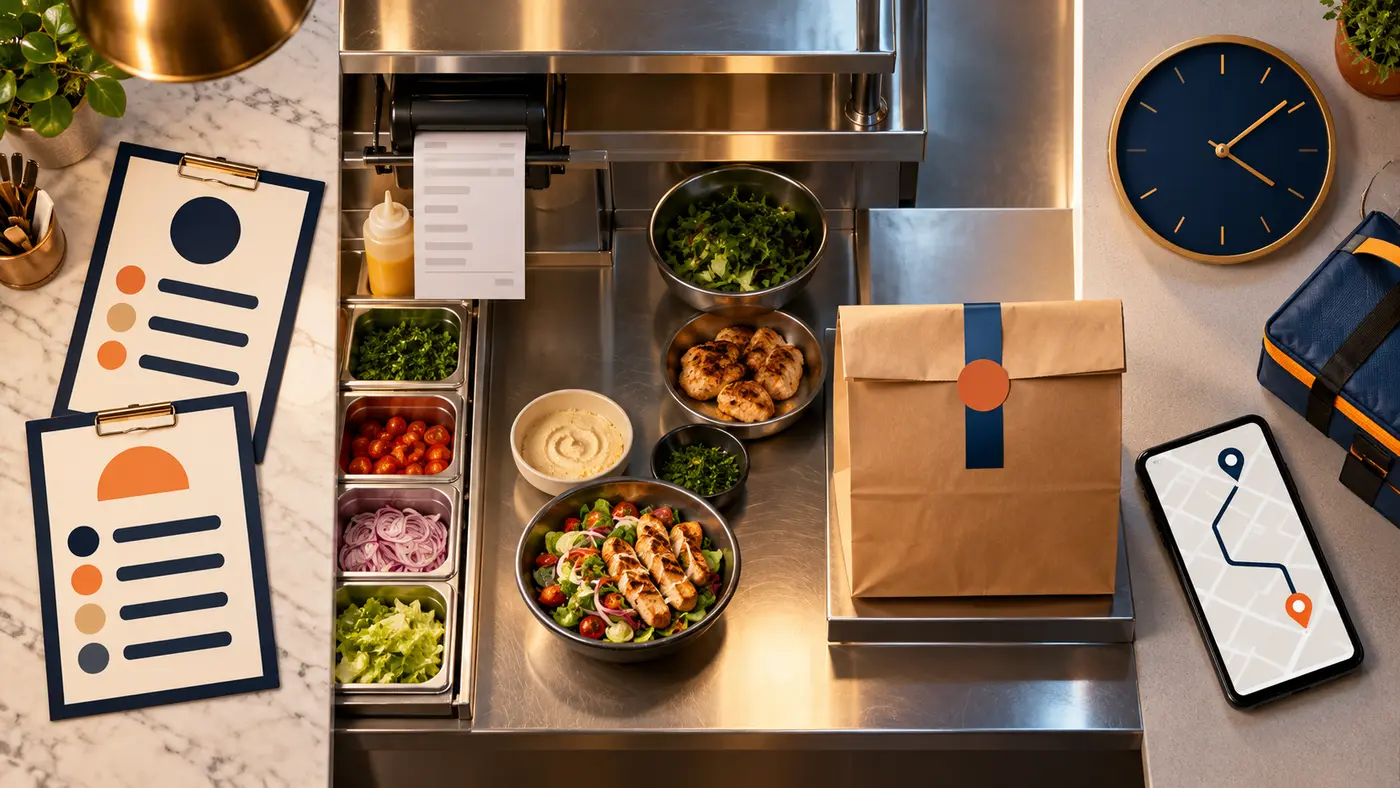
The restaurant controls preparation and handoff more directly than the final journey. Record order acceptance, kitchen-ready time and courier pickup separately. One total number cannot show where delay occurred.
Make the seal part of the process
A tamper-evident closure is useful only if the bag is checked before sealing. The person closing the order should verify the item count, drinks, sauces and special instructions against the ticket.
A practical hypothetical menu rewrite
This example is hypothetical and does not report a real conversion result.
Before: “Special family box — best seller.” The photograph shows several dishes, but the listing does not explain servings, sides or sauce choices.
After: “Grilled chicken rice box for 3–4 people. Includes twelve grilled chicken pieces, spiced rice, two garlic sauces, pickles and flatbread. Choose regular or spicy chicken. Drinks are not included.”
The rewrite does not rely on “best seller” as proof. It tells the customer what arrives and gives the kitchen a more precise order. The exact portion, allergen information and price must reflect the restaurant’s real recipe and current channel setup.
Measure menu quality without inventing causation
Track a small operational scorecard by item and channel:
- Item views to add-to-cart: a signal that may reflect appeal, clarity, price or placement.
- Order corrections: calls or messages needed to clarify a selected item.
- Unavailable-item rate: accepted orders affected by stock or capacity.
- Preparation-time distribution: median and slower cases, not only an average.
- Accuracy complaints: missing, wrong or materially different components.
- Refund and cancellation reasons: categorised before blaming a marketing source.
A better photograph may coincide with more orders, but that does not prove the photograph caused the change. Placement, price, weather, promotions and competitor activity may also move. Test one meaningful change at a time when possible.
A 60-minute delivery-menu audit
- Minutes 0–10: choose the ten items with the most orders or operational problems.
- Minutes 10–20: compare each app listing with the current recipe, portion, price and packaging.
- Minutes 20–30: remove unnecessary modifiers and mark unavailable choices.
- Minutes 30–40: view every image as a phone-sized thumbnail and note misleading extras or crops.
- Minutes 40–50: test one complete order from app to kitchen ticket, packing and courier handoff.
- Minutes 50–60: assign owners for menu copy, prices, availability and complaint review.
Final takeaway: food delivery marketing in Kuwait begins with a promise the whole operation can keep. Make the listing clear, the choices manageable, the price current, the image honest and the handoff measurable.
Sources and method
This guide uses current Kuwait MOCI material as regulatory context and turns it into a practical menu-and-operations audit. It does not interpret the law, claim compliance, or promise sales results. Official pages were accessed on 7 October 2026.